10 Signs Your Lincoln Siding Needs Replacement (Not Just Repair)
Most failing siding looks fine from the curb. The damage that actually matters — water behind the wrap, rotting sheathing, blown-off corners on the back of the house — hides until it's expensive. Here are the ten signs Lincoln homeowners should look for, and what each one means about whether to repair or re-side.
1. Caulk and sealant joints have cracked or pulled away
Walk every window and door and check the perimeter caulk. If it's cracked, gapped, or has pulled away from the trim, water has been getting behind it. On older siding, this is often the first sign that the entire flashing detail is failing — and that's a re-side conversation, not a re-caulk.
2. Visible bulges, ripples, or warping
Vinyl that ripples in summer heat or bulges out of the J-channel was installed too tight (no expansion gap). Wood lap that bulges has water damage or warped sheathing behind it. Either way: the siding has reached its limit.
3. Color fading on south and west walls
Some color fade is normal. Dramatic fade on the south and west walls of a Lincoln home — to the point that the front and back of the house look like different colors — means the UV inhibitor in the panel coating is exhausted. Premium replacement product carries 15–30 year fade warranties.
4. Visible substrate behind J-channel or trim
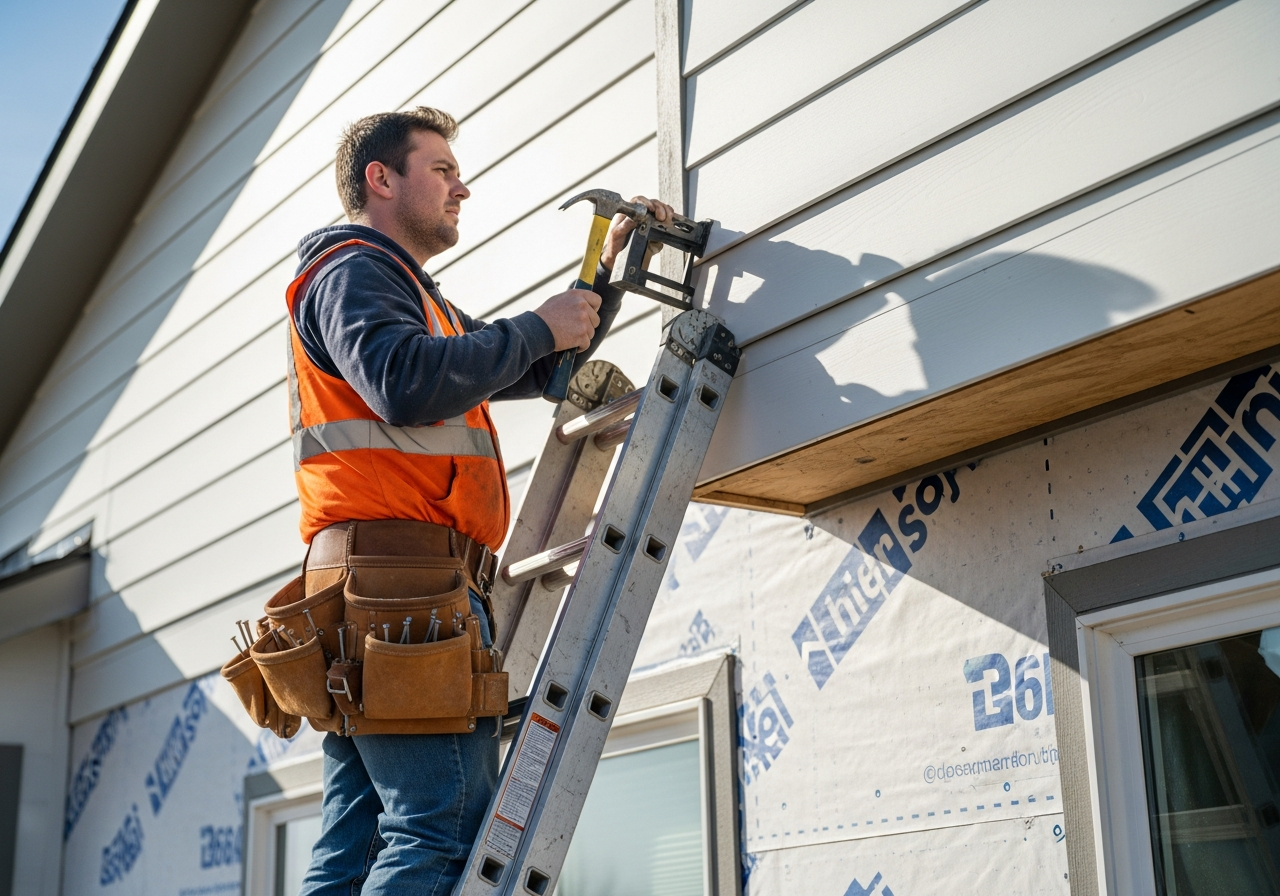
If you can see house wrap, raw OSB, or worse, daylight through the siding from any angle, water is going there too. Spot repair sometimes buys time; usually it's the start of a bigger conversation.
5. Hail damage you can feel but not always see
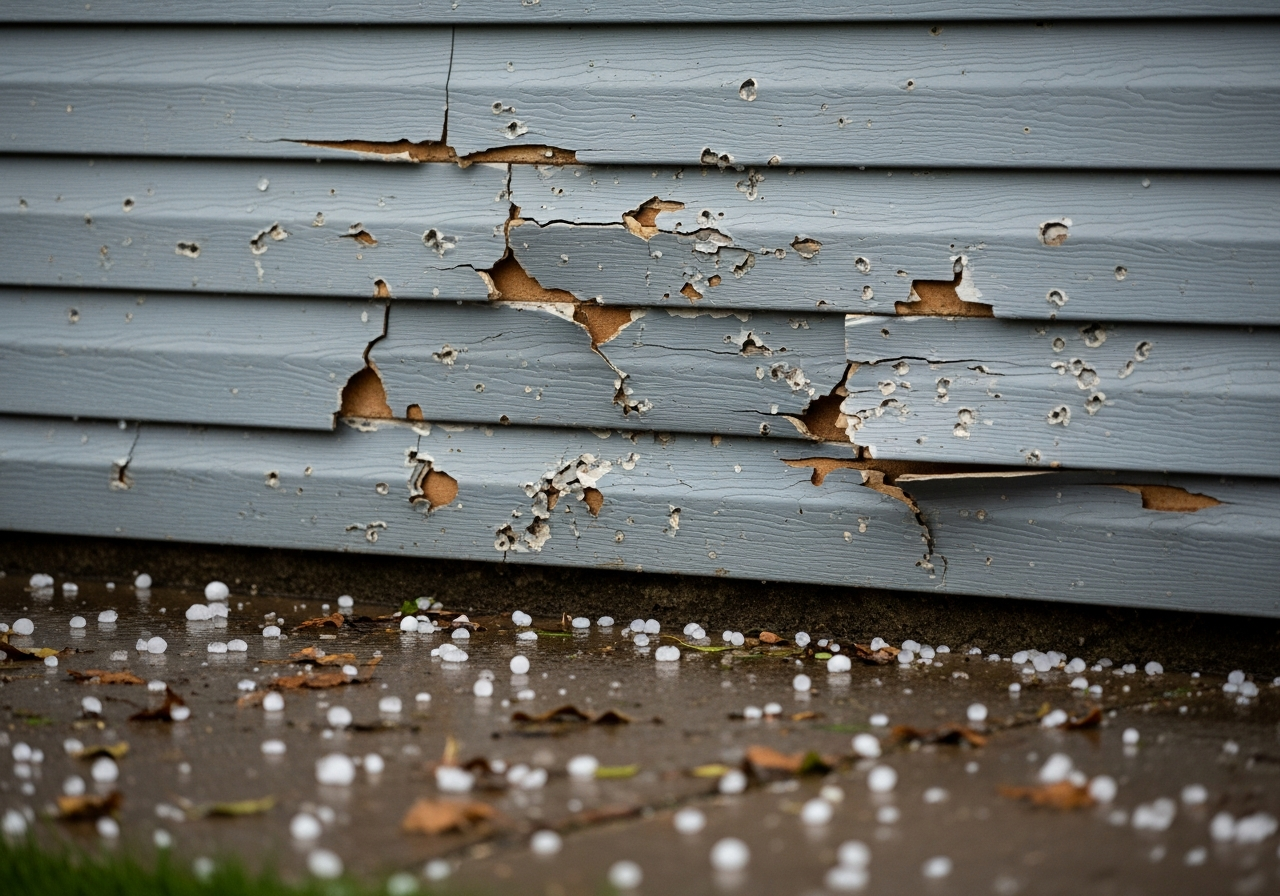
Vinyl can be impact-bruised below the surface. Run a hand across the panels at low angle on a sunny day. If you feel divots that you don't see on first look, that's hail damage — and it's a failure point for the next storm. Document it within your policy window.
6. Wind-pulled corners and lifted panels
Wind that lifted a corner three storms ago has been letting water behind the siding ever since. Even a small lifted section in a back-of-house location can hide significant sheathing damage.
7. Soft spots in the wall when you press
Press firmly on the siding around windows and at the bottom of walls. If it gives — if there's any sponginess — the sheathing behind it is rotted. This is always a re-side conversation.
8. Interior water stains or paint bubbling
Water stains on the interior side of an exterior wall, especially under windows or at the floor line, often trace back to siding flashing failures. By the time it's visible inside, the exterior assembly has been failing for a long time.
9. Rising heating and cooling bills
Older siding without proper house wrap (or with failed wrap) lets air and moisture move through the wall. Lincoln homes built before 1995 frequently see meaningful energy savings after a re-side that includes wrap renewal — sometimes 10–15% on heating and cooling.
10. Mold or mildew that keeps coming back
Surface mildew on shaded walls is normal in Nebraska humidity. But if you keep washing it off and it keeps coming back in the same spot, the wall behind it isn't drying properly — usually because the wrap or flashing has failed.
One sign isn't always enough
Any one of these can sometimes be repaired. Three or more, especially when they're spread across multiple walls, almost always means the assembly itself is at end-of-life — and that's a re-side, not a repair.
Get a written inspection
If you're seeing one or more of these signs on your Lincoln home, schedule a free written siding inspection. We'll walk every elevation, document the issues, take moisture readings on suspect substrates, and give you an honest recommendation. No sales pressure. Call (402) 261-7100.